 By Green Niles
The transition of casino games from land based establishments to the internet has fundamentally altered the gambling industry. Among all the classic card games, blackjack has experienced one of the most significant digital transformations. As internet speeds and streaming technologies advanced, online casinos began offering two distinct ways to experience this classic game: digital blackjack and live dealer blackjack.
Digital blackjack, often referred to as software based or random number generator blackjack, relies entirely on computer algorithms to determine the outcome of each hand. Live dealer blackjack, on the other hand, bridges the gap between digital convenience and brick and mortar reality by streaming a real human dealer operating a physical table in real time. For players looking to maximize their entertainment value and strategic efficiency, understanding the structural, psychological, and logistical differences between these two formats is essential.
The Underlying Mechanics: Algorithms vs. Physical Decks
The most critical distinction between digital and live dealer formats lies in how the cards are managed and distributed. This variance fundamentally shifts how the mathematical probabilities of the game manifest from hand to hand.
Digital Blackjack and Random Number Generators
When you play a hand of digital blackjack, there is no physical shoe containing decks of cards. Instead, the game uses a software program called a Random Number Generator. This algorithm constantly produces long sequences of random numbers that correspond to specific card values.
The most important strategic consequence of this system is that the virtual deck is effectively shuffled automatically after every single hand. Because the cards reset instantly, each round is completely independent of the previous one. This mechanical reality makes traditional card tracking or shoe depth strategies entirely useless, as the exact probability of drawing an ace or a ten remains identical on the first hand as it does on the hundredth hand.
Live Dealer Blackjack and Natural Card Shoe Progression
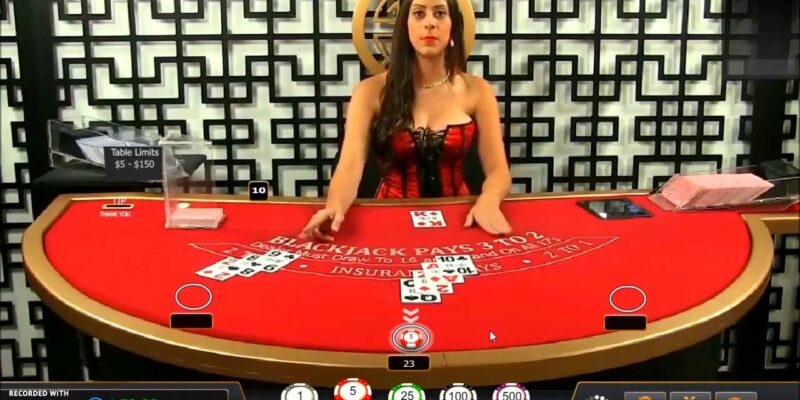
Live dealer blackjack reintroduces the authentic physical dynamics of a land based casino. A real dealer draws oversized cards from a physical plastic shoe that typically holds six or eight standard decks. The cards feature specialized barcodes or radio frequency identification chips embedded inside them, allowing the scanning cameras above the table to read the card value instantly and display it digitally on your user interface.
Because the dealer physically draws cards from the shoe without resetting it after each round, the game features a natural deck penetration progression. As low or high cards are pulled from the shoe and discarded, the remaining composition of the deck changes. This structural reality allows experienced players to utilize basic card observation strategies to gauge whether the remaining shoe is heavily saturated with high or low cards, affecting subsequent betting decisions.
Pacing, Time Management, and Session Velocity
The speed at which a game is played has a monumental impact on your overall bankroll exposure and decision making quality. The contrast in pacing between digital and live dealer tables is vast.
-
Digital Velocity: Software based blackjack moves at an incredibly rapid pace. Because there are no physical chips to collect, no real cards to deal, and no other players to wait for, a single round can be completed in less than ten seconds. A solo player can easily cycle through 100 to 200 hands per hour. While this is highly convenient for short gaming sessions, the extreme velocity can rapidly accelerate losses if a player experiences a cold streak.
-
Live Dealer Deliberation: Live streams operate on a human timetable. The dealer must wait for every seated player to select their action, physically deal the cards, and chip out the payouts at the end of the round. Most live tables impose a strict betting clock, usually giving players 15 to 20 seconds to make their choice. Consequently, a live dealer table averages roughly 50 to 70 hands per hour, providing a much more relaxed, leisurely pace that naturally extends the lifespan of your bankroll.
Psychology, Atmosphere, and Social Interaction
For many gambling enthusiasts, the appeal of casino gaming goes beyond mathematical percentages; it is deeply rooted in the social experience.
Digital blackjack is a completely isolated environment. The game features quiet ambient music or basic electronic sound effects, leaving you alone with the software interface. There is no social pressure, which allows you to take as long as you want between hands to consult strategy charts or manage your bankroll. However, this lack of human presence can make the game feel mechanical and detached after extended play.
Live dealer blackjack recreates the social theater of the casino floor. The dealers are trained to interact with the audience, greeting you by your username when you sit down and responding directly to comments typed into the live chat box. Furthermore, you share the virtual table with real players from around the world. Seeing how other players handle their hands creates a sense of community, allowing you to celebrate shared wins against the house or commiserate over a dealer hitting a backdoor twenty one.
Bet Sizing Options and Minimum Limits
Operating expenses shape the betting limits offered by online platforms, making certain formats better suited for different bankroll sizes.
Digital blackjack costs the casino very little to run once the initial software infrastructure is developed and integrated. Because hosting a virtual table requires minimal server bandwidth and zero human labor, platforms can afford to offer incredibly low minimum limits. It is common to find digital blackjack tables that allow you to wager as little as 50 cents or 1 dollar per hand, making it the perfect training ground for beginners or players operating with very small bankrolls.
Live dealer operations require massive financial investment. The casino must pay for physical studio space, high definition broadcasting equipment, continuous technical support, and the hourly wages of professional dealers. To cover these ongoing overhead costs, live dealer tables carry much higher minimum limits. You will rarely find a live streamed table with a minimum bet lower than 5 dollars or 10 dollars, and premium VIP tables frequently require minimum wagers of 50 dollars to 100 dollars per hand, pricing out casual or low budget players.
Frequently Asked Questions
Is the house edge identical between digital and live dealer blackjack tables?
The house edge is determined entirely by the specific rule variations implemented by the casino, such as whether the dealer stands or hits on soft seventeen, whether you can double down after a split, and if blackjack pays three to two or six to five. If a digital table and a live dealer table share the exact same rule framework, their theoretical house edge will be identical, though variance will feel different due to the distinct pacing of the two formats.
How do online casinos prevent the stream from lagging during a crucial live dealer decision?
Live dealer studios utilize advanced optical character recognition technology and redundant high speed fiber optic networks to ensure a stable broadcast. If your personal internet connection drops or lags mid hand, the server software automatically executes a default action based on basic strategy rules, or treats your hand as a stand to protect your active bet from being abandoned.
Can I play digital or live dealer blackjack for free using demo credits?
Digital blackjack tables are almost always available to play in a free demo mode, allowing you to practice strategies and learn the rules without risking real money. Live dealer tables do not offer free play modes because space at the physical table is limited and costs real money to operate. However, most casinos will allow you to open a live table and spectate the action without placing a bet.
What exactly is an unlimited seat or common draw live blackjack table?
A standard live table has seven physical seats, meaning you have to wait for an empty slot to play your own hand. An unlimited seat or common draw table solves this by dealing only one set of cards for the player position. An infinite number of online users can bet on this single hand simultaneously, making separate individual choices on whether to hit, stand, or double down, with the software calculating payouts based on each player’s unique choice.
Are side bets more profitable in digital blackjack or live dealer blackjack?
Side bets like perfect pairs or 21 plus 3 feature identical mathematical parameters across both formats, carrying a significantly higher house edge than the standard game. They are never considered long term profitable in either format, but live dealer tables often feature a wider variety of unique, visually flashy side options to enhance the entertainment value of the stream.
Can a live dealer see me through my webcam while I am playing?
No, the communication channel is entirely one way. The streaming cameras are located exclusively inside the casino studio, focusing on the dealer and the physical table. The dealer can only see the information displayed on their desktop monitor, which shows your chat messages, username, and the digital actions you click on your device interface.